CRED-NB on CBC’s The Current

CRED-NB was represented on CBC’s The Current this morning by Susan O’Donnell. CRED-NB is fighting for a nuclear free renewable energy future. We unfortunately need to spend much of our time countering the misinformation spread by the nuclear industry (and their government collaborators).

Have a listen to the interview with The Current’s Matt Galloway. The recording HERE is the discussion between Susan and Joe McBrearty, the CEO and President of Canadian Nuclear Labs. To listen to the full segment on the CBC page, including a presentation by a nuclear energy representative in Europe, click HERE.

Shouldn’t a new and experimental nuclear reactor for New Brunswick deserve a federal impact assessment?

The Hill Times and the NB Media Co-op published a commentary this week outlining some of the reasons why CRED-NB requested an impact assessment for NB Power’s SMR demonstration project. Federal Environment and Climate Change minister Steven Guilbeault rejected the request in December. You can read the NB Media Co-op article HERE, written by CRED-NB core member Susan O’Donnell (RAVEN project) and M.V. Ramana (University of British Columbia).

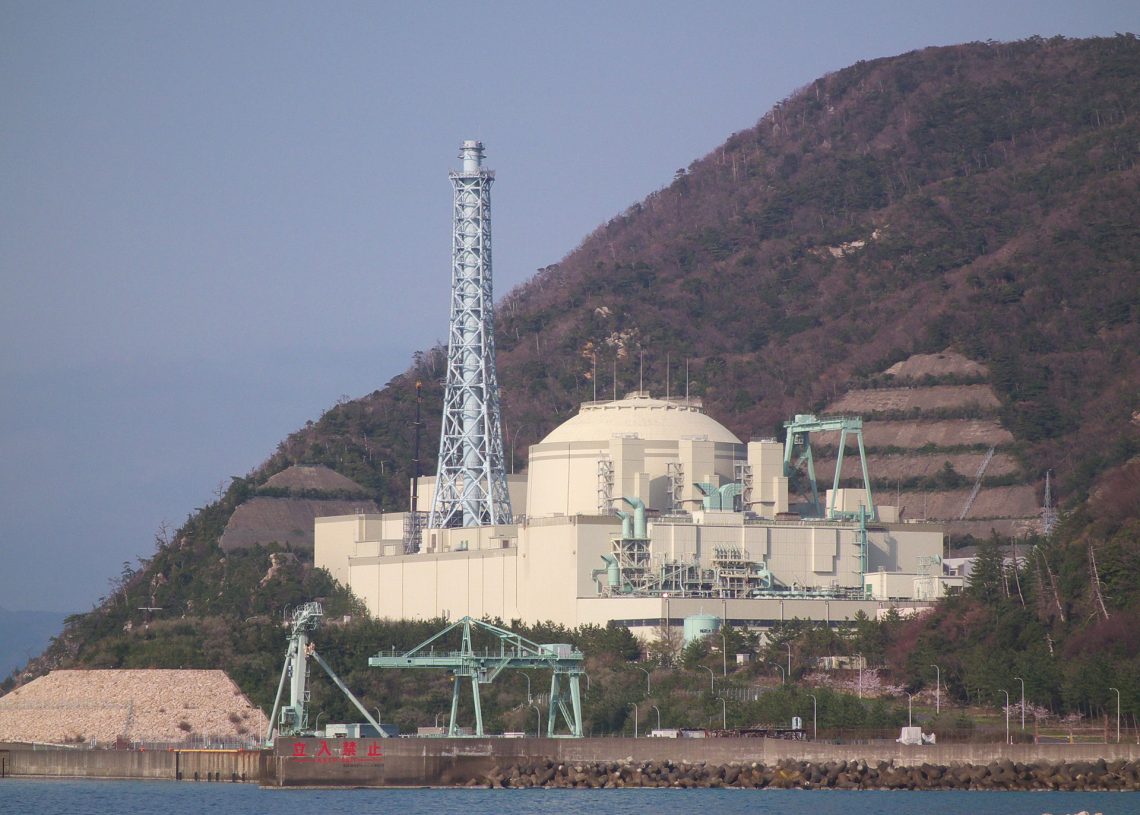
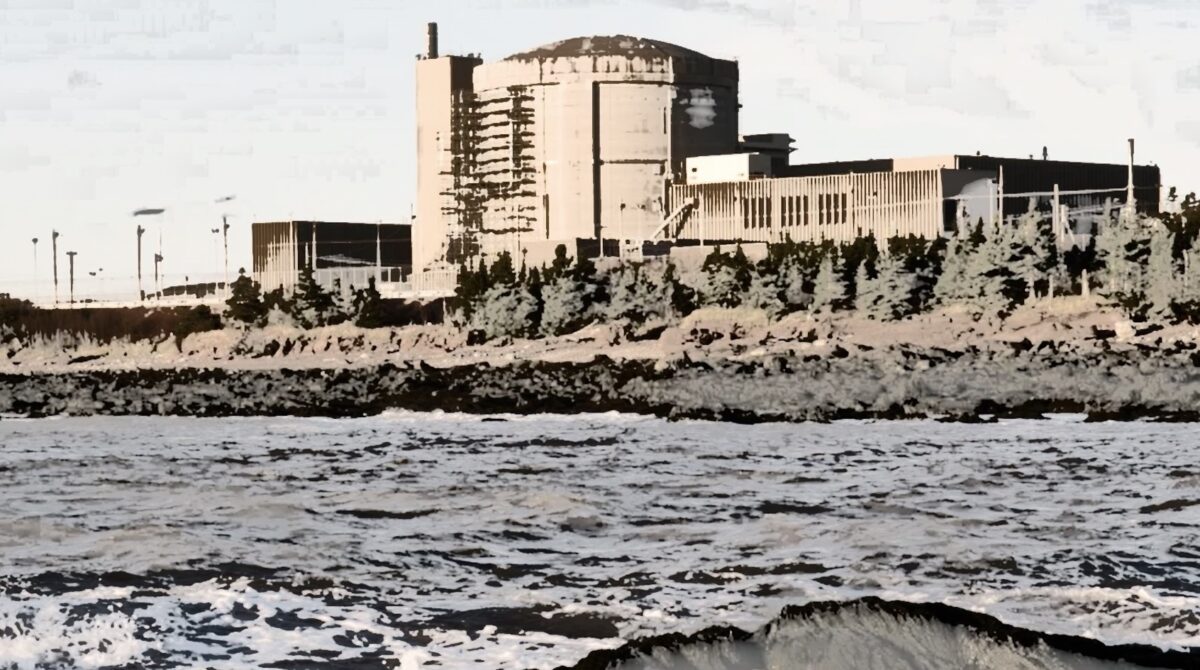
The photo with the article is Japan’s Monju demonstration reactor, one of many sodium-cooled reactors shut down because it didn’t work the way it was intended. That project, including cleaning up the radioactive waste it generated, cost upwards of $10 billion. The ARC-100 sodium-cooled reactor is one of two SMR projects planned for the Point Lepreau site on the Bay of Fundy.

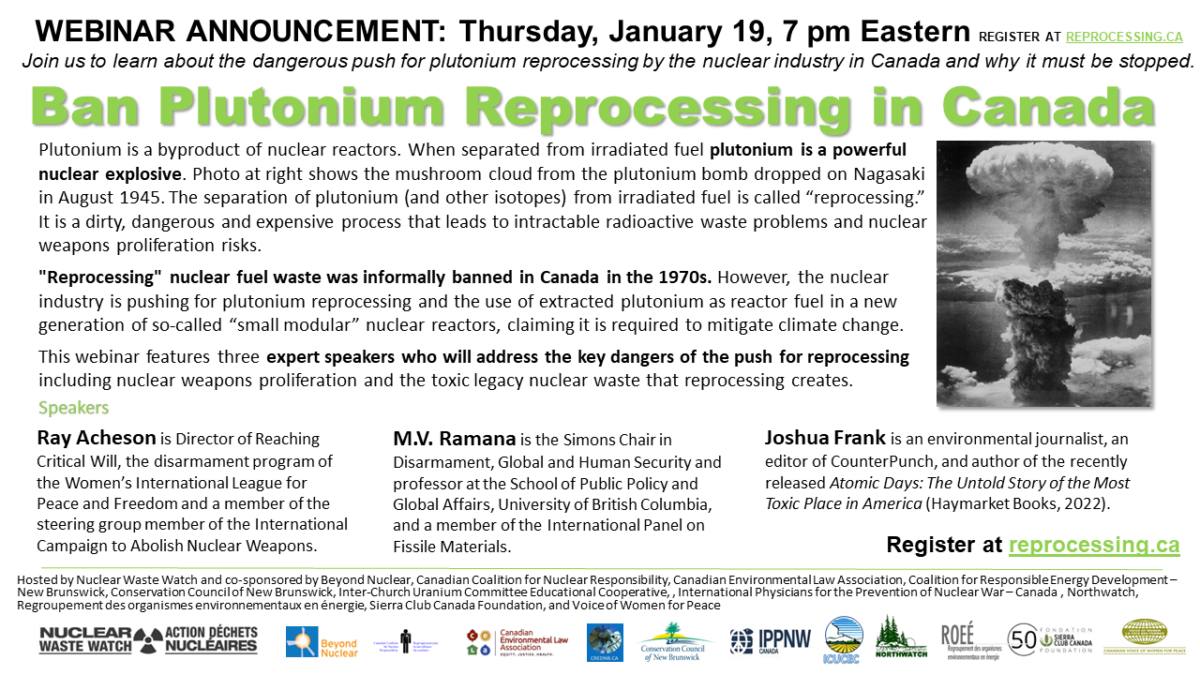
Jan. 19 @ 8pm AT: Webinar – Ban Plutonium Reprocessing in Canada

The new nuclear reactors (SMRs) planned for New Brunswick propose plutonium reprocessing as part of their designs.

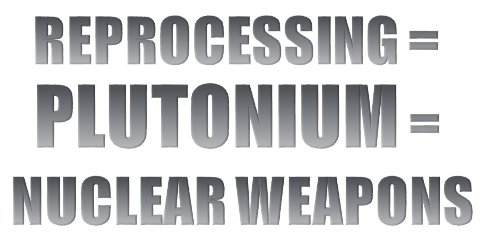
Plutonium reprocessing – extracting plutonium from used nuclear fuel – was informally banned in Canada in the 1970s because of concerns about nuclear weapons proliferation.

Plutonium reprocessing is a dirty, dangerous distraction from real climate action, a ridiculously expensive process that creates difficult new radioactive waste problems and nuclear weapons proliferation risks.

Now the nuclear lobby is pushing hard to include plutonium reprocessing in Canada’s new radioactive waste management policy. The industry is claiming that plutonium reprocessing is necessary for SMRs to fight climate change.

The Ban Plutonium Reprocessing in Canada webinar, organized by Nuclear Waste Watch with more than a dozen co-sponsors including CRED-NB, features three expert speakers.

Register HERE for the Ban Plutonium Reprocessing in Canada webinar, Thursday, Jan. 19 at 8pm Atlantic, 7pm Eastern.

Speakers:

Ray Acheson is Director of Reaching Critical Will, the disarmament program of the Women’s International League for Peace and Freedom and a member of the steering group of ICAN, the International Campaign to Abolish Nuclear Weapons that won the Nobel Peace Prize in 2017.

M.V. Ramana is the Simons Chair in Disarmament, Global and Human Security and professor at the School of Public Policy and Global Affairs, University of British Columbia, and a member of the International Panel on Fissile Materials.

Joshua Frank is an environmental journalist and author of “Atomic Days: The Untold Story of the Most Toxic Place in America” (Haymarket Books, October 2022)

Moderator: Theresa McClenaghan, Executive Director of the Canadian Environmental Law Association.

Register HERE for the Ban Plutonium Reprocessing in Canada webinar, Thursday, Jan. 19 at 7pm Eastern.

Hosted by Nuclear Waste Watch and co-sponsored by: Beyond Nuclear • Canadian Coalition for Nuclear Responsibility • Canadian Environmental Law Association • Coalition for Responsible Energy Development in New Brunswick • Conservation Council of New Brunswick • David Suzuki Foundation • Inter-Church Uranium Committee Educational Cooperative • International Physicians for the Prevention of Nuclear War – Canada • Northwatch • Ontario Clean Air Alliance • Regroupement des organismes environnementaux en énergie • Science for Peace • Sierra Club Canada Foundation • Voice of Women for Peace.

Nuclear Waste Watch and partners are leading the Ban Plutonium Reprocessing in Canada campaign launched this month. The campaign website is: reprocessing.ca

‘My burning shame’: George Monbiot on wood-burning stoves

Prominent UK environmental writer George Monbiot writes in The Guardian this week about his shame and regret for converting his home to heat with wood-burning stoves. “Wood burners are incredibly bad for the environment – and flood our homes with toxins, too… Every time you open the stove door to refuel, your home is flooded with tiny particulates, accompanied by other toxins.” Read his article HERE.

In New Brunswick, the NB Lung Association recommends not burning wood for the same reason. Info on their website includes: “Burning wood is a major source of air pollution, and can have negative effects on the environment and human health. Smoke from wood combustion is the leading source of particulate emissions in New Brunswick. In fact, wood burning accounts for over 70% of total Particulate Matter 2.5 in the province, more than any industrial source.”

Clean Energy or Weapons? What the ‘Breakthrough’ in Nuclear Fusion Really Means

In contrast to the hype about nuclear fusion and its promise of limitless energy, experts have been analyzing the recent ‘breakthrough’ announcement. For example, UBC professor M.V. Ramana wrote this piece in Z Network, HERE. For another perspective, the Bulletin of Atomic Scientists interviews Bob Rosner, a physicist at the University of Chicago and a former director of the Argonne National Laboratory, article HERE.

ARC-100 SMR: Does the Impact Assessment Agency of Canada do anything other than recommending not to do impact assessments?

The Impact Assessment Agency of Canada (IAAC) recommended to Minister Guilbeault to NOT grant CRED-NB’s request for a federal impact assessment of the ARC-100 nuclear reactor project for Point Lepreau. Our request included a letter of support from the group Concerned Citizens of Renfrew County and Area.

After the Minister’s rejection, the Renfrew County group did an analysis of the IAAC record. They asked: Does the Impact Assessment Agency of Canada do much anything other than recommending not to do impact assessments? The answer: looks like no, not much. The 360 staff in the Agency conduct only eight assessments per year. Read the full story on their website, HERE.

Federal environment minister rejects impact assessment for small modular nuclear reactor on the Bay of Fundy

December 23, 2022

Federal environment minister rejects impact assessment for small modular nuclear reactor on the Bay of Fundy

SAINT JOHN, NEW BRUNSWICK – In a deeply disappointing decision for the environment and public oversight, Steven Guilbeault, federal Minister of Environment and Climate Change, has ruled against a full federal Impact Assessment (IA) for a small modular nuclear reactor (SMR) proposed by New Brunswick Power at Point Lepreau in New Brunswick. 

This decision comes in response to a request submitted by the Coalition for Responsible Energy Development in New Brunswick (CRED-NB) on July 4, 2022, calling for an IA for this first-of-its-kind nuclear project in Canada.  Letters of support for CRED-NB’s request were submitted by the Wolastoq Grand Council, and Indigenous organizations representing the Peskotomuhkati Nation and the Mi’gmaq First Nations in New Brunswick and over 300 public interest groups and individuals.

In rejecting the need for an IA for the proposed SMR project, the Minister found it would be “unwarranted” as the concerns raised by Indigenous peoples and members of the public would be considered as part of the licensing process by the nuclear regulator and within New Brunswick’s Clean Environment Act.

“The Minister’s choice not to designate the SMR for an assessment goes against their commitments to sound, science-based decision-making and public participation,” noted Ann McAllister of CRED-NB, reacting to the news of the Minister’s decision. “This lack of a precautionary approach is especially dismaying given that sodium-cooled nuclear technology – of which this SMR is one – has a known history of accidents and has never been successfully commercialized, despite repeated attempts over the decades.”  

“The mechanism we had to uphold environmental justice has been denied,” reacted Kerrie Blaise, an environmental lawyer who assisted CRED-NB with the IA request. “The many unknowns and the potential for not only severe but irreversible impacts to the health of communities and the environment will not be subject to a rigorous public and cumulative effects assessment that an IA provides. This is quite simply something that cannot be achieved by the nuclear regulator in their license-specific assessment.” 

“By refusing an IA for the SMR project at Point Lepreau, the Minister suggested the concerns about the project raised by CRED-NB would be dealt with by a provincial Environmental Impact Assessment,” said Dr. Susan O’Donnell, Adjunct Professor at the University of New Brunswick and St. Thomas University, and CRED-NB member.  “The provincial process is not as comprehensive as the federal IA. However in its submission, the Government of New Brunswick stated that a provincial EIA would address all the concerns raised in the CRED-NB request, and that the premier has confirmed that a provincial EIA review, including public consultation, will be required before the project can proceed. We look forward to that comprehensive provincial review in the new year.”

Pressure from the nuclear industry lobby changed federal environmental assessment law in 2019, exempting SMRs below a certain threshold from undergoing a full environmental IA. The only way for this project to have undergone an IA, was at the direction of the Minister. The Minister’s decision sets an unfortunate precedent, weakening our impact assessment laws and ability for broad public participation. 

-30-


Media Contacts

CRED-NB Members:

Sam Arnold 
samarnold3@gmail.com 

Ann McAllister 
annmcallister72@gmail.com
506-898-1821

CRED supports call for public hearings into future of Point Lepreau nuclear plant

On Friday, Dec. 15, the Conservation Council of New Brunswick did the right thing: they called for public hearings into the future of the Point Lepreau nuclear plant. Read the media release HERE.

Following the latest outage at the Point Lepreau nuclear plant on the Bay of Fundy on the morning of Wednesday, Dec. 14, NB Power issued several vague news releases. Business as usual, another day, another unscheduled shutdown.

NB Power puts its news releases HERE, including any updates on the Lepreau situation that they deign to share with us, the public. When will they switch it on again? Will they tell us what happened or keep us guessing?

CRED-NB fully supports the CCNB call. We look forward to an open and transparent hearing process where all the facts are laid bare. What is this intermittent power reactor costing us and how much is it going to cost us to keep it limping along until its licence runs out in 2032? The licence will be subject to a CRTC review in 2027 but that’s too far away. Let’s get the facts out in 2023.

Canada’s new policy on radioactive waste must ban reprocessing

For immediate release 

December 15, 2022 

Canada’s new policy on radioactive waste must ban plutonium reprocessing 

Ottawa – Today, a national alliance of civil society organizations launched a campaign to formally demand that Canada includes a ban on plutonium reprocessing in its radioactive waste policy. 

Canada will release its policy on managing radioactive waste in early 2023. A draft policy for public comment released in February 2022 says that “deployment of reprocessing technology… is subject to policy approval by the Government of Canada” but does not take a clear position opposing this technology. 

Reprocessing is a means of extracting plutonium from nuclear fuel waste. Reprocessing is highly contaminating, practiced in only a few countries, and linked to nuclear weapons proliferation. 

Dozens of public interest groups and Indigenous communities participated in the federal radioactive waste policy consultations, and more than 7,000 Canadians submitted letters including a demand that the policy bans reprocessing. In March 2022, Nuclear Waste Watch’s Radioactive Waste Review Group released An Alternative Policy for Canada on Radioactive Waste Management and Decommissioning that forbids plutonium reprocessing. 

Commercial plutonium reprocessing has never been carried out in Canada. The limited reprocessing at the federal government’s Chalk River Laboratory to supply nuclear weapons material for the American military ended in the 1960s but left a legacy of nuclear contamination in Canada. 

Canada has had an informal ban on reprocessing since the 1970s, following India’s testing of its first nuclear weapon made using plutonium from a “peaceful” nuclear reactor, a gift from Canada. 

However, the informal ban was breached in 2021 when the federal government granted $50.5 million to a New Brunswick company, Moltex Energy, to develop its technology to reprocess fuel waste from existing CANDU reactors with the intent of exporting the technology globally. The government also granted more than $1.2 billion to Canadian Nuclear Laboratories (CNL) to expand their nuclear research centre at Chalk River to include a laboratory for research that could include plutonium reprocessing. 

Yet a 2016 CNL report found no business case for reprocessing CANDU fuel, in part “due to its low fissile content,” and the associated costs and risks. The CNL report also stated that reprocessing would “increase proliferation risk.”

That finding about reprocessing and nuclear weapons proliferation is replicated in a major report released in November 2022 by a U.S. National Academy of Sciences expert panel. The panel reached consensus that the proposed Moltex reprocessing technology does not provide “significant proliferation resistance.” 

“By reversing its ban on plutonium reprocessing and supporting the development of new reprocessing technology intended for export, Canada seems to be blundering into another dangerous proliferation miscalculation,” says Dr. Gordon Edwards, President of the Canadian Coalition on Nuclear Responsibility. Edwards cited the three letters written to Prime Minister Justin Trudeau by U.S. nonproliferation experts warning of the dangers of developing reprocessing technology in Canada. 

“Reprocessing intensely radioactive spent fuel presents more opportunities for release of radionuclides than leaving spent fuel in thick metal or concrete casks,” says Brennain Lloyd, spokesperson for Northwatch. “Reprocessing does not reduce the need for radioactive waste storage or long-term management. After reprocessing, the remaining material will be in several different waste forms, and the total volume of nuclear waste will have been increased by a factor of 20 or more.” 

“Are the policy-makers reading the research or only the nuclear industry’s sales and promotional materials?” asks Dr. Susan O’Donnell, spokesperson for the Coalition for Responsible Energy Development in New Brunswick. “There is no legitimate reason to support technologies that create the potential for new countries to separate plutonium and develop nuclear weapons. The government should stop supporting this dangerous technology.” 

-30- 

For more information: 

The Ban Plutonium Reprocessing campaign website: reprocessing.ca 

Nuclear Waste Watch: nuclearwastewatch@gmail.com 

Gordon Edwards, PhD, President, Canadian Coalition for Nuclear Responsibility
Phone: 514-489-5118 Email: ccnr@web.ca 

Brennain Lloyd, spokesperson, Northwatch 
Phone: 705-493-9650 Email: brennain@northwatch.org 

Susan O’Donnell, PhD, spokesperson, Coalition for Responsible Energy Development in New Brunswick
Phone: 506-261-1727 Email: info@crednb.ca 

Conservation Council of New Brunswick adopts resolution opposing nuclear power as future energy source

At its AGM at the end of November, the province’s flagship environmental organization, the Conservation Council of New Brunswick, adopted a motion opposing nuclear power as a future energy source and promoting instead investment in real climate solutions. The resolution was proposed by Dr. Janice Harvey, a CRED-NB core member. Read or download the CCNB resolution, HERE.