CBC radio interviews with CRED-NB

The day after the federal taxpayer $50.5 million gift to Moltex Energy for their new nuke in New Brunswick, CRED-NB’s Susan O’Donnell was interviewed by the CBC morning radio programs in Fredericton, Moncton and Saint John. Listen to the interviews below.

Fredericton – 6 minutes

Moncton – 10 minutes

Who’s minding the nuclear file? Oversight needed

Who’s minding the nuclear file? Oversight needed for New Brunswick’s risky plutonium plan

On March 18, the federal government announced $50.5 million in federal taxpayer dollars for controversial technology to “recycle” used nuclear fuel

Susan O’Donnell from the RAVEN project and CRED-NB and Gordon Edwards from the Canadian Coalition for Nuclear Responsibility published an article in the Hill Times and the NB Media Co-op describing why Parliamentary oversight is needed for this risky new project. Read the article here.

Extracting plutonium from used nuclear fuel? We need to know the risks

Radioactive waste must be kept isolated from all living things.

March 18, 2021

Extracting plutonium from used nuclear fuel? We need to know the risks

ROTHESAY, NB – The Coalition for Responsible Energy Development in New Brunswick (CRED-NB) urges the governments of Canada and New Brunswick to tell New Brunswickers and all Canadians about the risks of the Moltex experiment announced today.

The announcement this morning in Saint John by federal Minister Dominic LeBlanc and New Brunswick Premier Blaine Higgs was missing key information. Extracting plutonium from nuclear waste was banned in Canada by former Prime Minister Pierre Elliot Trudeau. Today the ban has been lifted, marking a significant departure in Canadian policy.

We wonder: why did Prime Minister Justin Trudeau lift the ban that Trudeau senior imposed? Where is the peer review of this proposed research that addresses the significant weapons proliferation concerns as well as environmental risks? Was ANY peer review conducted of the research proposed for New Brunswick before granting $50.5 million today to Moltex Energy to develop their technology?

Our research has found that it is highly dangerous and polluting to “open up” the used nuclear fuel in order to extract the desired plutonium. Extracting plutonium creates a civilian traffic in highly dangerous materials that can be used by governments or criminals or terrorists to make powerful nuclear weapons without the need for terribly sophisticated or readily detectable infrastructure.

Why was our province selected for this dangerous and controversial process? What are the implications for New Brunswickers and our natural environment?

In 2019, after intensive lobbying by the nuclear industry, the new federal Impact Assessment Act project list excluded new nuclear projects at Point Lepreau. These new nuclear projects are exempt from a federal impact assessment. Who will answer our questions?

“Because these projects planned for the Bay of Fundy are exempt from a federal Impact Assessment, there are no opportunities for the public to learn and have their say about this risky, expensive and speculative process. Pyroprocessing has never been done anywhere before. Why was New Brunswick chosen for this dangerous experiment?” said Ann McAllister, member of CRED-NB.

“It’s shameful and irresponsible that both the Canadian and New Brunswick governments are supporting the extraction of plutonium from CANDU used fuel without reviewing the environmental and weapons proliferation challenges,” continued McAllister. “We have grave concerns about the risks being introduced to our Bay of Fundy and surrounding communities with no public discussion or debate in the Parliament of Canada or the Legislative Assembly of New Brunswick,” she added.

The federal government has not yet developed a comprehensive policy and strategy for the oversight and management of our existing legacy of toxic radioactive waste, let alone the new types of deadly radioactive waste that would be generated by this new project.

“Some of the most contaminated sites on Earth – Hanford in the US, Sellafield in the UK, Mayak in Russia – are the result of large-scale reprocessing of used nuclear fuel that released dangerous long-lived radioactive material into the environment,” said Dr. Gordon Edwards, a nuclear expert who provides technical advice to CRED-NB. 

The Coalition for Responsible Energy Development in New Brunswick (CRED-NB) advocates for our province to be a leader in Canada in the development of innovation in renewable energy and nuclear decommissioning technologies.

CRED-NB supports the Wolastoq Grand Council Resolution opposing nuclear energy and nuclear waste on traditional Wolastoq territory, here.

CRED-NB has endorsed the public statement signed by more than 100 public interest, Indigenous and civil society groups across Canada calling for an end to federal funding for new nuclear reactor development, here.

-30-

For more information:

David Thompson

Spokesperson, CRED-NB

H: 506-635-1297

Technical expert: Dr. Gordon Edwards

President, Canadian Coalition for Nuclear Responsibility

ccnr@web.ca

cell: 514-839-7214

CCNR office: 514-489-5118

Coalition for Responsible Energy Development in New Brunswick (CRED-NB)

PO Box 4561 • Rothesay • New Brunswick • Canada • E2E 5X3

CRED-NB: What we stand for

info@crednb.ca

Why “Getting to Paris” with Trudeau doesn’t cut it!

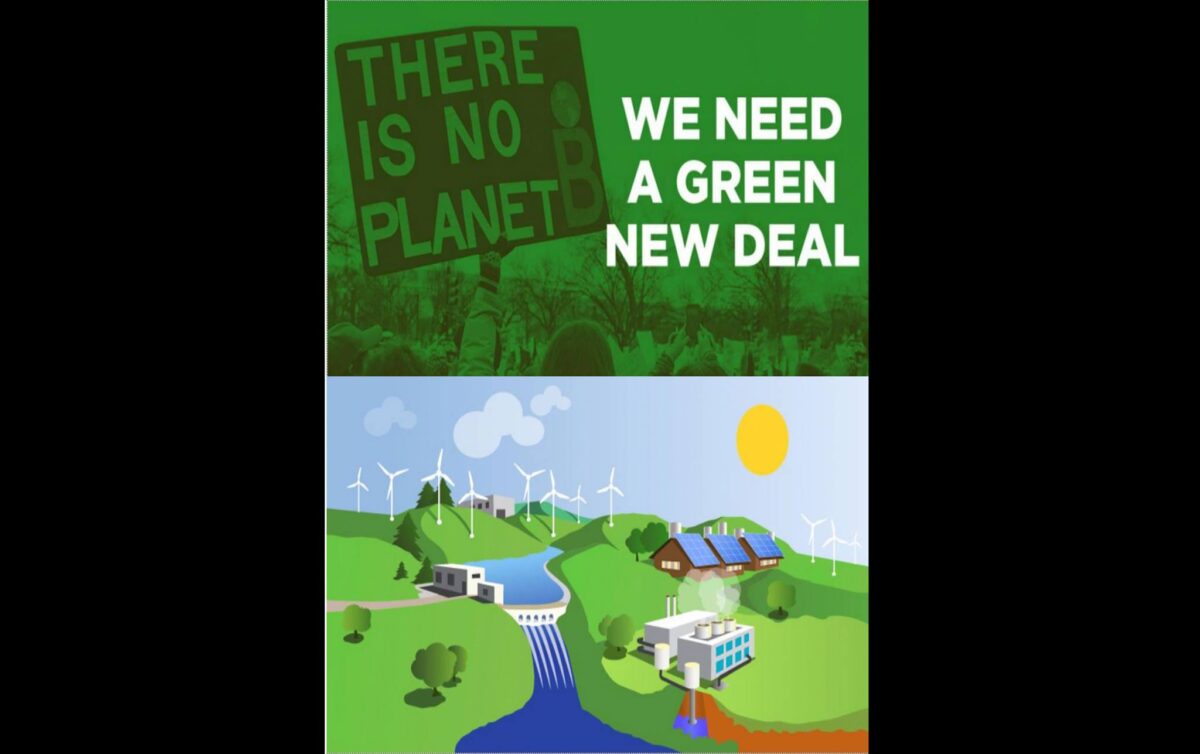
We are in a climate emergency.

Le français suit…

A Petition to Ensure Canada’s Climate Actions Match Urgent World Goals

Our Goal:
  • 1.5°C increase in global average temperature above pre-industrial level, as far below 2 degrees as possible (Paris target) (1)
  • IPCC science report warns of extreme weather and dire living
    conditions if exceeded.(2)
Reaching the Goal: Greenhouse Gas Reductions Targets below 2005 Levels:
Why the difference?
  • The Harper government target–30% below 2005 by 2030–was not based on IPCC Science for 1.5°C.
  • If all countries had the same target as Canada, global average temperature would increase to 5°C above pre-industrial levels.
  • The Trudeau government has adopted the same goal instead of improving on it.
  • Canada’s reductions in other sectors were absorbed in oil/gas sector increases
  • Canada’s emissions were up 20.9% over 1990 levels while in the USA, they were up 3.7, in Germany and Britain they were down by 40%, and in the EU they were down by 24%. (all measured as against 1990)
  • Cumulative emissions of those years require compensating targets now.
Emissions Accountability Reporting misses the urgency:
  • First ‘milestone year’ is not till 2030
  • First five-year accountability period is 2030-2035
  • First ‘progress report’ is 2028 – too late to correct shortfall.

Please sign this House of Commons “Petition to Ensure Canada’s Climate Actions Match Urgent World Goals”

https://petitions.ourcommons.ca/en/Petition/Details?Petition=e-3221

The petition calls on the federal government to :

  • Increase the targets for reducing emissions to actually meet the Paris Agreement targets
  • Replace the “advisory group” per Bill C-12 (3) – apparently multi-stakeholder, with an expert scientific group

Note:  One of the Government’s sectoral ‘Action Plans’ that clearly reflects this same lack of climate ambition and urgency, is federal funding for the development of “Small Modular Nuclear Reactors” which will take an estimated 10 years and add to the toxic radioactive waste.  More than 100 organizations have signed on to the Statement on the Canadian Environmental Law Association website calling these new nuclear reactors “…a dirty, dangerous distraction from tackling climate change.” https://cela.ca/casework-climate-action-nuclear-energy-case-against-smrs/

(1)To hold to 1.5°C, the IPCC says (October 2018 special report) : “In model pathways with no or limited overshoot of 1.5°C, global net anthropogenic CO2 emissions decline by about 45% from 2010 levels by 2030… reaching net zero around 2050 …” (emphasis added)

(2)his key finding is from Chapter 3 of the same report:
The rate of change for several types of risks may also have relevance, with potentially large risks in the case of a rapid rise to overshooting temperatures, even if a decrease to 1.5°C can be achieved at the end of the 21st century or later (medium confidence). If overshoot is to be minimized, the remaining equivalent CO2 budget available for emissions is very small, which implies that large, immediate and unprecedented global efforts to mitigate greenhouse gases are required (high confidence). {3.2, 3.6.2, Cross-Chapter Box 8 in this chapter} https://www.ipcc.ch/sr15/chapter/chapter-3/

(3) House of Commons Bill C-12 of the 43rd Parliament is “ An Act respecting transparency and accountability in Canada’s efforts to achieve net-zero greenhouse gas emissions by the year 2050

***

POURQUOI « ARRIVER À PARIS » AVEC TRUDEAU NE FAIT PAS L’AFFAIRE!

Une pétition pour nous assurer que les mesures climatiques du Canada correspondent aux objectifs mondiaux urgents

 Notre objectif: 
  • Augmentation de 1,5 *C de la température moyenne mondiale au-dessus du niveau préindustriel, aussi loin que possible en dessous de 2 degrés (objectif de l’Accord de Paris) (1)
  • Un rapport scientifique du GIEC met en garde contre les conditions météorologiques extrêmes et les conditions de vie désastreuses si elles sont dépassées. (2)
Atteindre l’objectif : réduction des gaz à effet de serre inférieurs à 2005
Pourquoi la différence?
  • L’objectif du gouvernement Harper – 30 % de moins qu’en 2005 d’ici 2030 – n’était pas fondé sur la science du GIEC pour 1,5*C.
  • Si tous les pays avaient la même cible que le Canada, la température moyenne mondiale passerait à 5 degrés C au-dessus des niveaux préindustriels.
  • Le gouvernement Trudeau a adopté le même objectif au lieu de l’améliorer.
  • Les réductions du Canada dans d’autres secteurs ont été absorbées par les hausses du secteur pétrolier et gazier.
  • Les émissions du Canada ont augmenté de 20,9 % par rapport aux niveaux de 1990, tandis qu’aux États-Unis, elles ont augmenté de 3,7 %, en Allemagne et en Grande-Bretagne de 40 %, dans l’UE de 24 %. (Ces taux sont mesurés par rapport à 1990).
  • Les émissions cumulatives de ces années nécessitent maintenant des objectifs compensatoires.
Les rapports sur la responsabilisation des émissions ne sont pas à l’état d’urgence :
  • La première « année charnière » n’est pas avant 2030
  • La première période de reddition de comptes de cinq ans est de 2030-2035
  • Le premier « rapport d’étape » est en 2028 – trop tard pour corriger le déficit.

Veuillez svp signer cette « Pétition pour s’assurer que les mesures climatiques du Canada correspondent aux objectifs mondiaux urgents »

https://petitions.noscommunes.ca/fr/Petition/Details?Petition=e-3221

La pétition demande au gouvernement fédéral de :

  • Augmenter considérablement les objectifs de réduction des émissions pour atteindre les objectifs de l’Accord de Paris
  • Remplacer le « groupe consultatif » en vertu de la loi C-12 (3) – multipartite selon les apparences, par un groupe de scientifiques experts.

Remarque : L’un des « plans d’action » sectoriels du gouvernement, qui reflète clairement ce même manque d’ambition et d’urgence climatiques, est le financement fédéral pour le développement de « petits réacteurs nucléaires modulaires » qui prendra environ dix ans et ajoutera aux déchets radioactifs toxiques. Plus de 100 organisations ont signé la Déclaration sur le site Web de l’Association canadienne du droit de l’environnement, appelant ces nouveaux réacteurs nucléaires « … une distraction sale et dangereuse de la lutte contre le changement climatique ».
https://cela.ca/casework-climate-action-nuclear-energy-case-against-smrs/

(1) Pour se tenir à 1,5 degré, le GIEC indique (rapport spécial d’octobre 2018) : « Dans les voies modèles sans dépassement ou avec dépassement limité de 1,5 °C, les émissions nettes mondiales de CO2 anthropiques diminuent d’environ 45 % par rapport aux niveaux de 2010 d’ici 2030 … pour atteindre zéro net vers 2050 … » (emphase ajouté).

(2) la principale conclusion provient du chapitre 3 du même rapport :
Le taux de changement pour plusieurs types de risques peut également être pertinent, avec des risques potentiellement importants en cas d’augmentation rapide des températures de dépassement, même si une baisse à 1,5 °C peut être atteinte à la fin du XXIe siècle ou plus tard (confiance moyenne). Si l’on veut minimiser les dépassements, le budget équivalent de CO2 restant disponible pour les émissions est très faible, ce qui implique que des efforts mondiaux importants, immédiats et sans précédent pour atténuer les gaz à effet de serre sont nécessaires (confiance élevée). {3.2, 3.6.2, Boîte 8 dans ce chapitre} https://www.ipcc.ch/sr15/chapter/chapter-3/

(3) Le projet de loi C-12 de la 43e législature de la Chambre des communes est « une loi qui respecte la transparence et la reddition de comptes dans les efforts déployés par le Canada pour atteindre des émissions nettes de gaz à effet de serre nulles d’ici 2050.

Briefing paper: The proposed nuclear reactors (SMRs) for New Brunswick

The paper presents considerations for the two proposed nuclear reactors (SMRs) for New Brunswick.

The briefing paper authors are RAVEN primary investigator Dr. Susan O’Donnell at the University of New Brunswick, Dr. Louise Comeau from the Conservation Council of New Brunswick, Dr. Janice Harvey of St. Thomas University and co-investigator of the RAVEN project, Dr. Gordon Edwards of the Canadian Coalition for Nuclear Responsibility in Montreal and Dr. M.V. Ramana at the University of British Columbia in Vancouver.

The briefing paper is available on the RAVEN website: here.

Meeting with Minister O’Regan

On February 25, Susan O’Donnell represented CRED-NB at a meeting with federal Natural Resources Minister Seamus O’Regan and national civil society representatives. The focus of discussion was the federal review of the radioactive waste policy. Susan highlighted the letters, each signed by more than 100 civil society groups across Canada, outlining concerns and expectations related to the policy review. She also brought up the concern we have with the proposed high-level waste “recycling” at Point Lepreau.

Video: Transitioning to a Low-Carbon Economy in NB

Chris Rouse: Transitioning to a Low-Carbon Economy in New Brunswick: Why public investments are better than incentives.

Chris Rouse, the founder of New Clear Free Solutions, developed an Integrated Resource Plan for New Brunswick that achieves a 95% Renewable energy solution through public investments. In this video presentation, Chris discusses his IRP that offers the least cost sustainable solution to our environmental problems that benefits all New Brunswicker both now and in the future.

The event was organized by the Coalition for Responsible Energy Development in New Brunswick (CRED-NB), Extinction Rebellion New Brunswick, and the RAVEN project (Rural Action and Voices for the Environment) at the University of New Brunswick.

Click on the video below to watch Chris’ presentation and the Q&A session that followed.

Nuclear is dirty energy. It leaves an everlasting radioactive legacy.

Nuclear is dirty energy. It leaves an everlasting radioactive legacy. Download our new fact sheet here.

Nuclear is dirty energy. It leaves an everlasting radioactive legacy.

All nuclear reactors create radioactive poisons as unwanted byproducts. We’ve made lots of them at the Point Lepreau nuclear plant on the Bay of Fundy west of Saint John.

The two “small” nuclear reactors proposed for New Brunswick will produce more of the same as well as new kinds of radioactive poisons.

Radioactivity from nuclear reactors and their waste must be securely contained because it is highly dangerous to all living things.

Exposing a living cell to radioactive material can alter its DNA. Chronic exposure can eventually cause cancers and other harmful health effects, including genetic damage that can affect offspring.

Any release of radioactivity at Point Lepreau can harm living things nearby including in the Bay of Fundy.

Used nuclear fuel

The deadliest and most concentrated form of nuclear waste is used (irradiated) nuclear reactor fuel. It must be safely stored for hundreds of thousands of years (essentially forever).

However, no secure long-term storage facility for spent fuel has been approved for use anywhere on the planet.

NB Power is planning to move the Point Lepreau deadly waste in future to a permanent storage facility on Indigenous territory in Ontario. The Indigenous communities in Ontario don’t want it. We must consider permanent storage at Point Lepreau.

“Recycling” used CANDU fuel

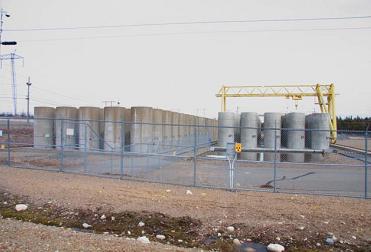
At Point Lepreau, irradiated nuclear fuel from the CANDU nuclear reactor is sealed in temporary storage silos. The new “small” nuclear reactor projects plan to open these storage silos. They will remove and dissolve the solid fuel bundles at high temperatures.

Their plan is to access the plutonium and a few other materials inside and make new fuel for the “small” reactors. 

More than 95 percent of the dissolved fuel will be rejected as unusable radioactive waste.

In Canada, this has never been done before on a commercial scale, and never with irradiated CANDU fuel. It raises many safety and security concerns

Some of the most contaminated sites on Earth are the result of large-scale reprocessing of irradiated nuclear fuel to extract plutonium.

Facts about plutonium

Plutonium, a human-made material created during the nuclear reaction, is the primary explosive material in nuclear weapons. 

It is also extraordinarily toxic when inhaled.

Reprocessing makes plutonium more accessible to terrorists for further use in “dirty” bombs (“radiological dispersal devices”) or improvised nuclear weapons.

There would be increased security at Pont Lepreau for the “small” nuclear reactors.

New types of used fuel created

The “small” nuclear reactors will create new types of used fuel.

Smaller in volume, but much more radioactive by weight than the Point Lepreau spent fuel, it will also need to be kept out of the environment of living things for hundreds of thousands of years.

Radioactive building materials

When “small” reactors reach end of life, radioactive steel, concrete, and contaminated equipment will remain radioactive for thousands of years. These dangerous materials cannot be safely recycled.

The radioactive waste from dismantling the “small” reactors will be New Brunswick’s responsibility. Our future generations will be paying for the secure storage and maintenance of this waste for thousands of years into the future.

Conclusion

The only guaranteed long-term solution to the problem of deadly radioactive waste is to stop making it. Moving existing waste to a safe and secure location at Point Lepreau requires planning, but let’s not make the problem worse by producing even more.

We must not fund new nuclear reactors. Instead, we should invest in cheap, clean, safe alternatives that can be quickly deployed to move New Brunswick to a green energy future.